Thursday, December 15, 2011

Day 5 (12-15-2011)


The day began with another trip to FANLYC (The cancer treatment center for children).  It was another day spent doing whatever tasks the center required of us. As my classmates were assigned chores, I dodged hard labor in favor of interacting with the people.  One lady told me that her 17-year-old daughter was retrieving chemotherapy treatments from the center absolutely free (which I might add would be comparably very expensive in the United States). It is always heartwarming to know that there are places, donors, and volunteers working to improve the quality of life for those who can use it most.

Following FANLYC, we visited Albrook Mall (which can easily fit several University Malls within its boundaries). I spent most of the time comparing the prices of products in Panama with similar ones in the United States. Those products that originate in Panama are far less expensive than similar types that originate (meaning shipped from China) in the United States. For those brands sold at the mall that are also sold in United States (Guess, Pepe Jeans, Casio, Nike, Beverly Hills Polo Club, etc…), the prices were much higher than in the United States. Another interesting thing to note is that every brand had its own store versus department stores in the United States that bring them all to one place (Macys, Sears, Dillards, etc…)

After Albrook Mall, we returned to the USF Health office at the Ciudad del Saber to receive a brief overview of how Panama’s healthcare system works. Basically, everyone in Panama gets health care for free because it is funded by a social security system (paid for by those who can afford to pay into it). Those who are unhappy with the quality of the free healthcare can elect to pay for services at a private hospital. We spent a lot of time comparing Panama’s system to that of the United States’. I came to the conclusion that healthcare, in the United States, is accessible to everybody for the most part, but the costs associated with paying for services or the repayment of services serves as its own barrier. Panama’s system treats healthcare as a basic right for everybody, much like education or police protection. The United States may believe the same thing, but the Healthcare model doesn’t reflect that belief.

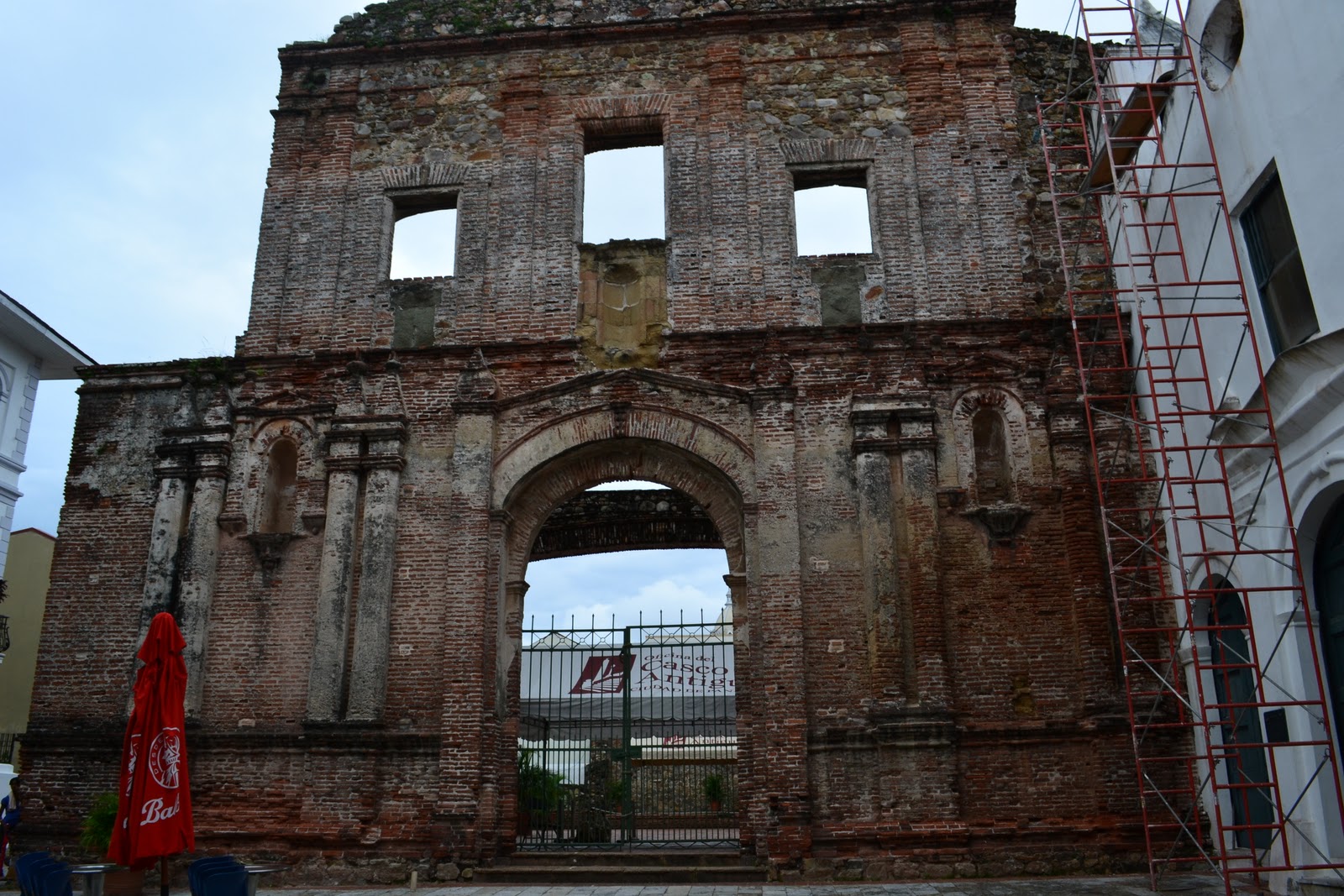
We concluded our day with a visit to Casco Viejo (Panama’s old City). There were buildings dated from the 1600s. Architecture never fascinated me much, but there is an interesting story behind one of the buildings that is directly connected to the United States. There is a bridge in the old city that has been around since the 1600s. When Panama was trying to convince the United States that Panama was an ideal location to build the canal, it used a picture of the bridge (check picture below) to show that earthquakes didn’t affect Panama. Panama surprisingly has no active volcanoes, is not hit by hurricanes, or is not affected by earthquakes.

-Kyle Castello


Day Four


          Homey smells of spice and roasting meat drifted in from the kitchens to blend with the clean tang of Clorox. I plunged my hard-bristled brush into the pan of bleach water on the table, sloshed it about, then trailed it dripping down to the plastic dining hall chair unfolded before me.  The tiny ridges of the textured surface hid grime like the crescent-tipped fingernails of a mud pie chef.  But a few quick, hard swirls from my brush transformed the dingy grey to a fresh off-white.
            A caretaker passed by as I scrubbed away at a particularly well-used chair.  She turned back to me and smiled.
            “Trabajas con gusto.”  You work with gusto.
            I smiled back. “Si,” and nodded with a self-conscious laugh.  “Gracias.”

            Gusto, a word understood across three languages, means a hearty or keen enjoyment.  It conveys passion: a joyful undertaking.  Chair scrubbing is not an activity that elicits such a response from me, normally.  But today wasn’t a normal day.  We were spending the first of three mornings of service at FANLYC, a home for sick children, in Panamá City.  There at FANLYC, kids who should be battling imaginary pirates and make-believe dragons are instead fighting infection and very-real cancer.  Just upstairs from where we worked were children recovering from transplant surgery; children who were pinning their hopes of life on a recovery without infection.  That thought alone made me scrub harder.  Gusto, indeed.
            Behind me, the cross-cultural sounds of a bustling kitchen played chorus to the Christmas music coming from the speakers tucked into the corners of the dining hall’s peaked ceiling.  Children swooped in and out, ducking behind and around the legs of women who were moving with sure efficiency in the crammed kitchen.  Some of my classmates shared the space, chopping carrots, and shredding lettuce from impossibly large bags of produce that lined the walls.  On the bus later, some of them showed off carrot-stained fingers that wouldn’t fade even after a few washings.
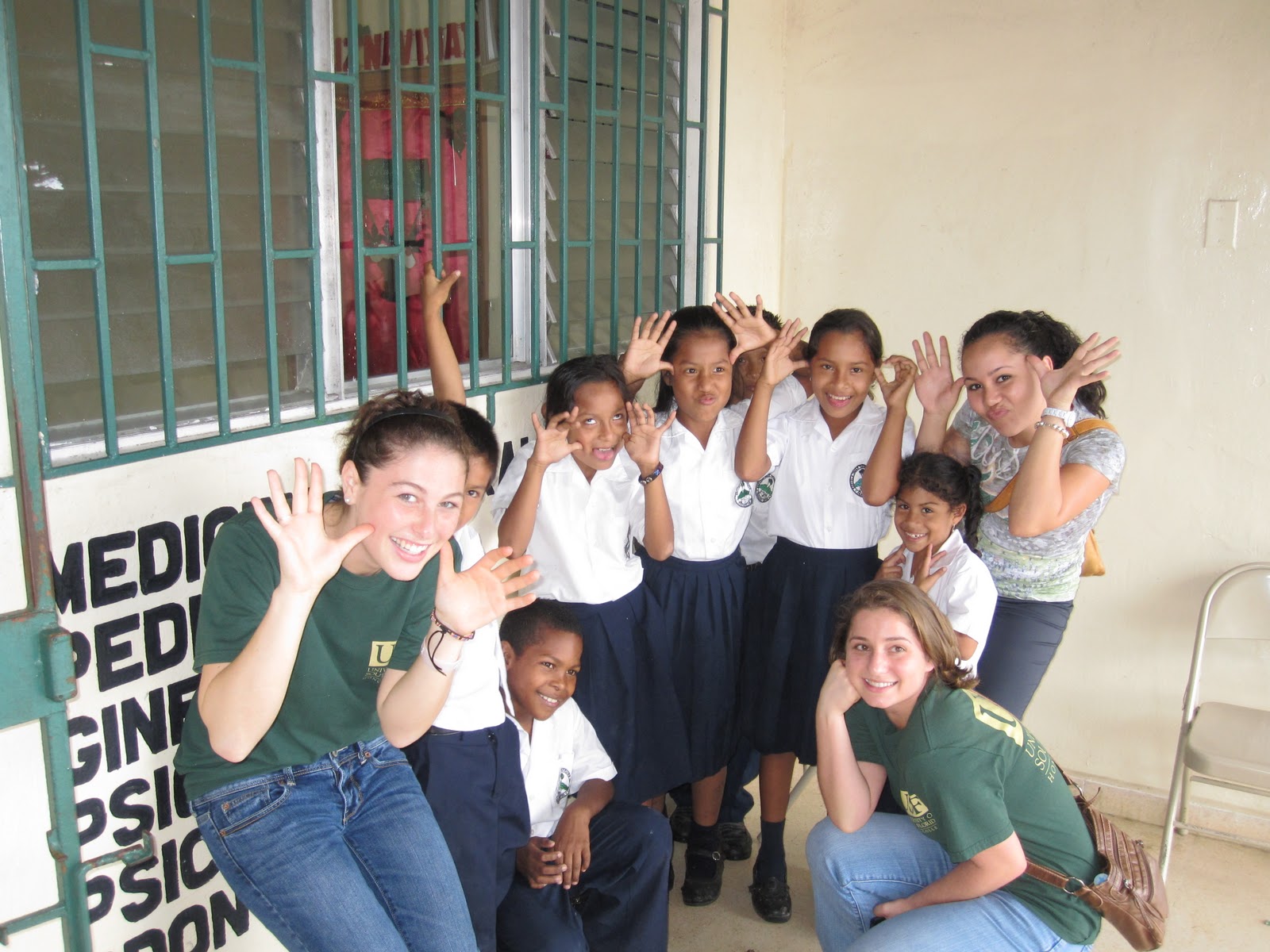
            In the open-air courtyard beyond the dining room, children played and laughed, delighted to have so many new green-shirted playmates.  Some could converse easily with the kids, either fluent themselves or having enough memory from first-year Spanish to do the trick.  Others relied on phrase-book standbys and expressive hands, which worked beautifully –after all, play and love are universal. 
            As are Chopsticks!  The familiar dulcet tones sounded from the chapel’s small piano as one of my classmates, without need of words, taught a little girl to tap out the tune.
            I snapped this photo before we left. 


            It’s one of many artistic touches that brighten the home and help make it such a cheerful place to be.  My own classroom Spanish translated the words slowly, but once I’d read them all, they gripped me, and haven’t let go yet:

All children are valuable.  Help us up if we fall, and if we lose ourselves, give us a hand.  Give us what we need to grow up happy and strong, and care for us the best you can.

Dia Cu4tro


Early morning and we were off to our first volunteer experience in Panama at FANLYC, (Fundacion Amigos de Ninos con Leukemia y Cancer: Foundation Friends of Children with Leukemia and Cancer). FANLYC is a live-in center for chronically ill cancer patients next to the children’s hospital, “Hospital del Nino.” We were all welcome with open arms and given a tour right away. I right away thought “this place is like an oasis for cancer patients,” it was peaceful and cheerful. I thought it was wonderful that the patients could have an escape so far away from the environment of, yet so close to the hospital where they receive their intensive chemotherapy, radiation, and (or) surgeries. Though we missed their annual Christmas party and were not able to help in decorating and organizing for it, the FANLYC staff found some more basic needs that could use our attention. At first there was not enough work for every large person in our group, but eventually everyone found their niche and was happy to do his/her part. By late morning, the lunchroom was spick-and-span, over 100 carrots were peeled and chopped for lunch, the outdoor area was cleaned, and a couple of the kids were entertained. Our time at FANLYC really allowed us to work as a group and showed the impact of teamwork.


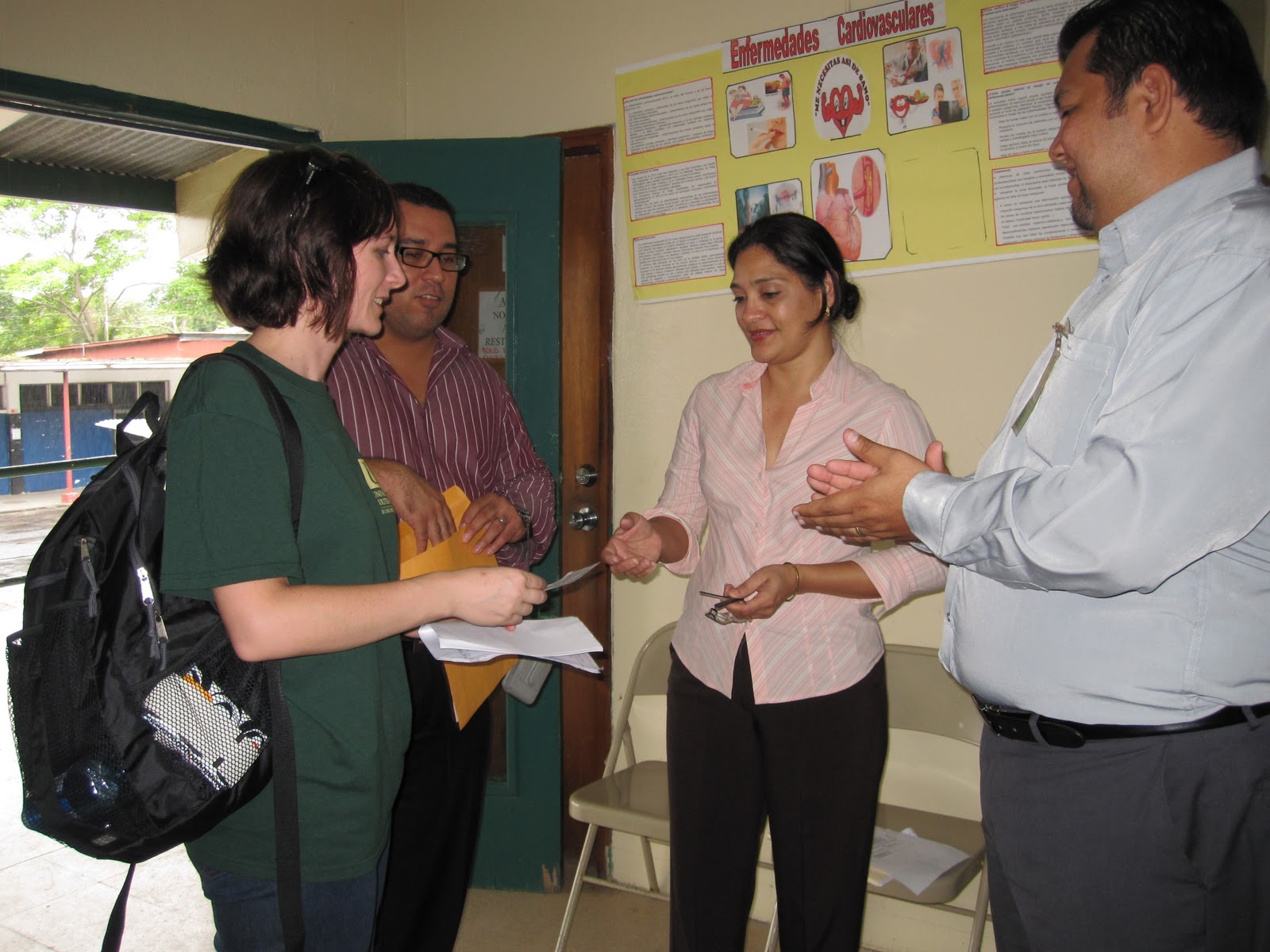
Arriving at the rural clinic, Clinica Paraiso, the differences in the environment between this medical center versus the public and private hospitals. It was very clear to see that monetary donations are in dire need at the clinic from the moment we walked in. The ceiling had water damage and was missing a few tiles, the equipment was (let’s just call it) vintage, and there was very little space even for the equipment they did have. While the clinic was not in the best condition, anyone walking in would be able to tell that a little goes a long way for the staff and the patients. The condition of the clinic was rough, but it wasn’t until I saw the ER that I realized how rough things really were. The staff, despite the condition of the ER, was proud to tell us that Paraiso was home to one of the five ambulances for the sixteen rural clinics in the region, and that even though their ambulance was old, they were  grateful to have one. The attitude of the staff at the clinic made me realize that even though they may not be getting the best, they are definitely getting the best of the physicians and medical team. The check from the 2010 Panama class was presented to the clinic and right away designated for fixing the leak in the ceiling and repair of the water damage it had already caused. This was very exciting, in that the money was already going to be put to use and for something we all knew the clinic needed.
I HOPE THE 2012 PANAMA EXPERIENCE CLASS WILL CONSIDER DONATING TO THE PARAISO COMMUNITY HEALTH CENTER!


After a delicious lunch, we arrived at Nutre Hogar, a temporary home for the sick and destitute children of Panama with a focus on malnutrition. While we were there to present the money we have raised over the last four months, we were more excited for the hour we were scheduled to spend with the children. After a quick tour, we were asked to assist with taking the children out for playtime. The babies had to be left inside because they were more dependent and at a higher risk of infection. Most of the students found a child to take outside. I have to admit, I was worried I would be left without interaction. I was surprised and happy to see everyone trying to spend time, not just with the child they had initially, but with all of the children. It was so wonderful to be a part of this and see the compassion and willingness to help of our entire group once again J We quickly became attached to the children after playing with and feeding them, some of us attached to a particular child, but just as quickly we had to say goodbye and prepare for the rest of our day.


I became attached to a little one named Cumila. At first she would not smile, talk, or interact much, but once we found something that she did like (she thought it was funny to play with fallen strands of hair) she spent the rest of the time being the sweetest little girl. I couldn’t get over the change I had seen in her in just an hour.  Leaving her was really hard for me though, I had finally gotten her to laugh and play and just as easily made her cry when it was time to go. I wish her the best as I do to Nutre Hogar and hope I will see her again one day!

Dressed up and ready to go, the group, minus Lisa who was unfortunately not feeling well, headed to Tinajas for dinner. We had an incredible meal in a beautiful ambiance and to top it all of we were the audience of an incredible performance representing traditional Panamanian dance and culture. The smiles would not come off the performers faces, in contrast to the Embera performers who seemed to be bored with the task of performing for tourists, though they are proud of their heritage and culture. I am not sure if it had to do with the amount of money being paid to the dancers performing in an upscale restaurant versus the Embera who work to feed the entire tribe or the difference in the attitudes of their audiences that affected the performances, but the differences were noticeable. The performance at Tinajas, however, really did make the evening spectacular, even though we all really missed Lisa.Early morning and we were off to our first volunteer experience in Panama at FANLYC, (Fundacion Amigos de Ninos con Leukemia y Cancer: Foundation Friends of Children with Leukemia and Cancer). FANLYC is a live-in center for chronically ill cancer patients next to the children’s hospital, “Hospital del Nino.” We were all welcome with open arms and given a tour right away. I right away thought “this place is like an oasis for cancer patients,” it was peaceful and cheerful. I thought it was wonderful that the patients could have an escape so far away from the environment of, yet so close to the hospital where they receive their intensive chemotherapy, radiation, and (or) surgeries. Though we missed their annual Christmas party and were not able to help in decorating and organizing for it, the FANLYC staff found some more basic needs that could use our attention. At first there was not enough work for every large person in our group, but eventually everyone found their niche and was happy to do his/her part. By late morning, the lunchroom was spick-and-span, over 100 carrots were peeled and chopped for lunch, the outdoor area was cleaned, and a couple of the kids were entertained. Our time at FANLYC really allowed us to work as a group and showed the impact of teamwork.


Loving Panama,
Ilianette

Tuesday, December 13, 2011

Day Three!

       Day three of our visit to Panama and we are finally starting to fall into a routine. The heavy humid air and the moistness around us it something that is becoming easier to adjust too after the dryer months we left behind in Florida. Walking up to the bus that is waiting for us in front of the villas fills me with a sense of anticipation and excitement because of what the day holds. For me, some of the most interesting moments have been looking out the windows watching Panama pass us by. It is unbelievable watching the contrasting areas and drastic differences of the city.
        Driving through the "slumy" areas on the way to Hospital del Nino was an eye-opening experience. Children run barefoot on the uneven sidewalks that are scattered with garbage and broken bottles while their mothers watching from decaying balconies and their fathers gather together on the street corners discussing the dealings of the day. Stray, underfed dogs weave through hanging laundry patrolling the same streets the children play on. The slums have a certain beauty about them that makes it difficult to look away, while the poverty of it also fills you with a sense of sorrow and pity. Its amazing to think how many of the adults from that area have never left that area or experienced a different part of the world and whether their children will share that same fate. It makes me wonder what they think of us foreigners and whether they can't help but feel irritable towards Americans. I got a similar feeling from the parents and patients at the Hospital del Nino.
        Simply put, Hospital del Nino was a heartbreaking experience. Terminally sick children, whose mothers' abandoned them, crying mothers of new-born babies, and an overflowing neonatal ward were norms. Walls in need of paints jobs and ceilings with water damage was seen every corner we turned. It was not hard to see what a desperate and needy state the hospital was in. However, inside the private hospital you almost forget that you're in a third world country; it feels similar to back home in the states. Clean, crisp hallways and the obviousness of the higher class people using this hospital is a complete contrast to what can be said of the public hospital. We were in shock how two hospitals only miles away look like they are worlds apart.
       Then leaving the Hospital Punta Pacifica affiliated with Johns Hopkins Medicine International we again see how a city can hold so many differences. On the way to Casco Viejo we see a completely different beauty of Panama City. Gorgeous, green parks and shining skyscrapers surround us on both sides, and the old city itself is something out of a storybook or fairytale. It is a completely indescribable sight. The post-colonial architecture of the buildings is absolutely breathtaking...to say the least. Clustered together along the narrow cobblestone streets looks like a view from a Crayola crayons box. The vivid yellows, pinks, purples. and blues of the buildings adds a romantic feel to our adventure. The buildings themselves are a beautiful scenery, not even taking into account the view from the old seawall of the Panama City skyline. On top of that, add Juan's stories and history of the area makes my jaw drop that this antique world exists only a five hour plane ride from home.

-Vita Bobelis

En El Tercer Día

'Mena,' as how the Emberá would say hello!


Today is our fourth day, or our third day of class-scheduled activities, here in the tropical paradise of Panamá! At this point it seems that everyone has acclimated to our new environment, except maybe not to the cold showers or the lack of our smart phones, and we’ve all found how great of a group we are and how well we all get along. I’m truly grateful for this and it’s been such an enjoyable trip for me so far because of this!

Our adventure began at a visit to the Hospital del Niño de Panamá (see picture of us below) where we were graciously given a guided tour by Dr. ‘Jo’ Young, who’s currently in the 7th month of her residency.  An interesting fact: Dr. Jo comprehended English much better than she was able to speak it, but more so, she spoke quickly with few pauses. I think that I can speak for the majority of the group when I say that translating for her was rough. Although she was able to reply in English with some rudimentary responses, even some of our fluent speakers had difficulty translating some medical terms.  Regardless of the deficiency in sharing information, perhaps due to the large group in a hallway or the translations, we were all indubitably left with a strong imprint of our experiences there.


If you happen to scan the website for the Hospital del Niño de Panamá (http://www.hn.sld.pa/) I’ll tell you that, in proportion to the reality of what we actually saw, there are too many smiling faces and the impression that you may get of a clean hospital is inaccurate. Although I haven’t been in many Hospitals to get a better comparative understanding, we received an overall shocking and emotional experience throughout our tour of the emergency room and the many services, specialties, and wards offered to the public. At times we felt that we were invading the privacy of the patients and their families but at other times we couldn’t help but be overwhelmed by the lives that we observed and shed some tears for them. Something about seeing the tiniest babies requiring extensive care in the neonatal ward was especially difficult for me.  I was shocked by the number of babies that were in there and to find out that most stay between 3-4 months and some are still there for their 1st birthday. I found that the cost is extremely minimal, less than approximately $30 for long-term stays, and “families only pay if they’re able” –says Dr. Jo! I also found that their mothers aren’t allowed to visit for more than an hour due to the exorbitant number of babies in the filled-to-capacity room. This neonatal ward is built for the care of 70 babies; however, they’re able to even double the room capacity in times of need and we were assured that if that wasn’t enough, they would make room or find other space in the hospital to accommodate the baby. See picture below.


We also had an opportunity to see and visit with a 23 year old (see the picture below of him when he was 10 in the black sweatshirt) in the dialysis ward that had been abandoned by his family many years ago. Although we had been told of his story beforehand as a previous Honors class recalled their meet with him, it was still shocking to actually place him and his environment and find out about the commonality of familial abandonment at the Hospital.


Another such abandonment case was a 4 year old, named Roberto (in the picture below), who had excess water in his brain (for a lack of proper medical terminology). It was especially challenging for me to cope with the reality that he was abandoned. Although it may be my ignorance of his families’ circumstances and/or how strongly his disease interferes with his development, I felt that if he had been my son, I wouldn’t have given up the idea of improving his social skills, motor skills through physical therapy, and just being there to comfort him as he had confused reactions to our presence there. One particular question that was posed by our teacher resonated with me.  Paraphrased, “what will eventually happen to Roberto?” to which Dr. Jo responded that he could potentially, but improbably, be adopted or join a type of foster home at the hospital. Hopefully a good future is in store for him.


We ended our tour in the Emergency Room, where we learned of the structure of how patients are categorized and then some of us got an opportunity to speak with a new mother who had just come into the hospital because her baby was sick. This was an especially distressing and compassionate period for some of my peers in comforting for the mother.

I think that, out of all of our experiences thus far, this Hospital is in most need and would be able to stretch any donation as far as they could.  There was a clear distinction that this was a Hospital to serve, rather than one for business purposes, like we saw later in the day at the Hospital Punta Pacífica (http://www.hospitalpuntapacifica.com/).


Ciao!
-Alexandra Wallmueller


Dia Numero Dos


Today is our third day in the lovely City of Knowledge where USF Health is located and we are staying during our time here in Panamá. The USF Health office came to the City of Knowledge in 2006 and since then they have been providing research, education, and healthcare to the country of Panamá. We took a bus tour around the City and learned about all of the amazing opportunities and resources offered here to students and the people of Panamá. I had no idea the city had so much to offer! They are currently doing health education programs in the Comarcas, educating the residents about basic personal hygiene that will improve their overall health status.
I was filled with joy when I saw so many international organizations right next door to one another. UNICEF and UN Refugee were the two I am most interested in looking into. When I saw those offices I even said “My life is changed!”, because I really could see myself here using my second language of Spanish to my advantage. After seeing what Panamá has to offer, I would not mind making a career dedicated to serving the rural areas here in Panamá.  Several of the organization’s regional offices were located here in the city. I love how much diversity the city has to offer; there is something here for everyone from Special Olympics to PAHO.  Many of the students in the group today were interested in finding internship opportunities here. The City of Knowledge has been opening the doors for so many people and providing support to people all throughout Panamá and the world. When the earthquakes occurred in Haiti and Chile almost all of the international organizations in the city left to go provide relief support. This shows the heart and passion of the city. The city in my eyes is based around the ideology of passionate serving to your neighbors and striving for new ways to meet their needs by providing excellent education.
The City of Knowledge is growing faster every year. On our tour of the city we saw a lot of construction from new biotechnology laboratories to simply a new commercial area with food for the residents. I thought it was interesting how the City of Knowledge, once known as Fort Clayton, which was once the largest military base in the America’s has now turned into this area where people from all over the world are getting together for the enhancement of Latin America.
After eating a delicious meal at Mira Flores on the Panamá Canal what a better way to spend it than shopping at a Panamanian market. The time had come to put our bargaining to the test. We were all excited to see all the intricate pieces of art and shop for our families and ourselves. When I first walked in to the market my eyes were blown away by so many beautiful colors.  I made a mental note of what I really needed, but you all know how those mental notes work out. I walked from stand to stand being greeted by the friendliest Panamanians I have met thus far. Their friendly greetings made me want to buy from them. Let’s just say it is too easy to convince me. Luckily, I did not bring too much money so I was able to control my spending.
As I approached a stand I realized a lot of the items being sold appeared extremely similar to some of the items I had seen yesterday at the Embera tribe. That is when I realized it is because the items were the exact same ones! The lady who was selling them was an Embera. I engaged in conversation with her and she began to tell me she was from the Darien and travels to the market for economical reasons. She currently lives in the city but goes back to community frequently. She was a genuinely sweet lady. She was wearing modern clothing and listening to salsa. I felt bad for her because she has to be away from her family for the sole purpose of getting income. However, as I walked from stand to stand I saw more and more Embera women and men. There seemed to be a good amount that travel together. Another surprising thing I noticed was the price differences in items at the market compared to at the Embera’s at the Chagres River. I started to think that the reason the prices are more expensive at the tribe at the Chagres is because too many people bargain here and they end up having to lower the prices.
My favorite part of today was the market (although the canal was amazing!) because I was able to practice my Spanish and form some connections with the vendors. They were all so willing to help. One of the ladies was also even telling me about her life and introduced me to her daughter. I felt so welcomed and accepted. However, I did notice the difference from the way I was treated and some of the tourists from the cruise lines were treated. I felt I was treated with more of a kind heart and they were treated as targets for good money. Despite some of the negative things I witnessed, I came to the conclusion people in Panamá are some of the nicest people I will ever meet. I really hope we will be able to go back to the market!

By: Mitzy Gonzalez


The Panama Canal

Today, I was blessed with the opportunity to watch several ships embark on a passage through the Miraflores Locks of the Panamá Canal. Due to the immense size of the container ships, I thought that they were buildings until we actually arrived at the canal. It is mind boggling to think that each of these ships are carrying goods that will be received by various destinations across the globe. In all likelihood, we have all consumed or utilized a product that has crossed through the Miraflores Locks. This concept was reinforced in my mind when I saw ships labeled with Chinese caricatures, English names, and Spanish phrases. It is amazing to thinks that we are witnessing international trade in progress.

Beyond just witnessing international trade and transport, the actual ingenuity of the engineering of the Panamá Canal is astonishing. The Panamá Canal operates using two lanes that act as elevators for large ships. Watching the ships rise and decline with the changing water levels within the locks was surreal. It is one thing to hear a lecture about the canal or view a film and another to actually see it in action. The truly amazing thing about the locks is the absence of electrical power; the canal relies on gravity to move water from Gatun Lake through all of the locks to transport vessels.

The canal museum offered many unique experiences. The first exhibit contained various artifacts from the construction and inauguration of the canal. In addition the historical memorabilia and placards, the museum had a computer system that would allow you to look up the names and birthdays of people that worked on the canal. Although this was all informative, my favorite moment of the day occurred when I was transitioning from the first exhibit of the canal museum to the second exhibit.  To reach the second exhibit, I had to venture up an escalator that was located next to a large window.  The window was so close to the canal that the sight of a giant blue container ship that was headed my way startled me. It seemed like I was close enough to the canal that I could reach out and touch the ship.

The trip to the Miraflores Locks also consisted of a buffet style lunch that allowed us to sample various types of traditional Panamanian cuisine. I was surprised by how delicious all of the food was. Even if I did not know what something was, I piled it onto my plate so that I could taste it. My favorite dishes included a type of fish that was covered in this marvelous tangy sauce and topped with limes. The other Panamanian food that I enjoyed trying was ceviche. After watching the Anthony Bourdain video in class, I knew that I wanted to try ceviche and it was even better than I expected. In addition, the conversation that I had with one of the waiters at Miraflores was the first real test of my Spanish skills. At the conclusion of our short chat, I was surprised by how much I was actually able to manipulate and understand the language.

Christine Goddard


Sunday, December 11, 2011


Day 1

        Our class had the wonderful opportunity of visiting the Emberá indigenous people of Panamá. We arrived in Panamá City, Panamá, yesterday and settled in at our villas in La Cuidad de Saber within the Canal Zone area. I was eager to wake up this morning to prepare for the trip out to the remote region where the Embera dwell at the mouth of the Chagres. Our tour guide, Juan, was open and knowledgeable about the history and culture of the Emberá. Being descendant from the Embera on his mother’s side, he was very informed and answered our questions with hilarious stories and jokes. We stopped briefly at a street-side produce market where we were encouraged to “buy the fruit”. Not only did we get to taste the delicious fruit, my classmates and I were able to sample what the locals call, “chicha’. Chicha, or juego natural, is the most fantastic tasting juice cocktail on the planet. There were so many different flavors to choose from and each one had a distinct, tropical fruit flavor. 
     
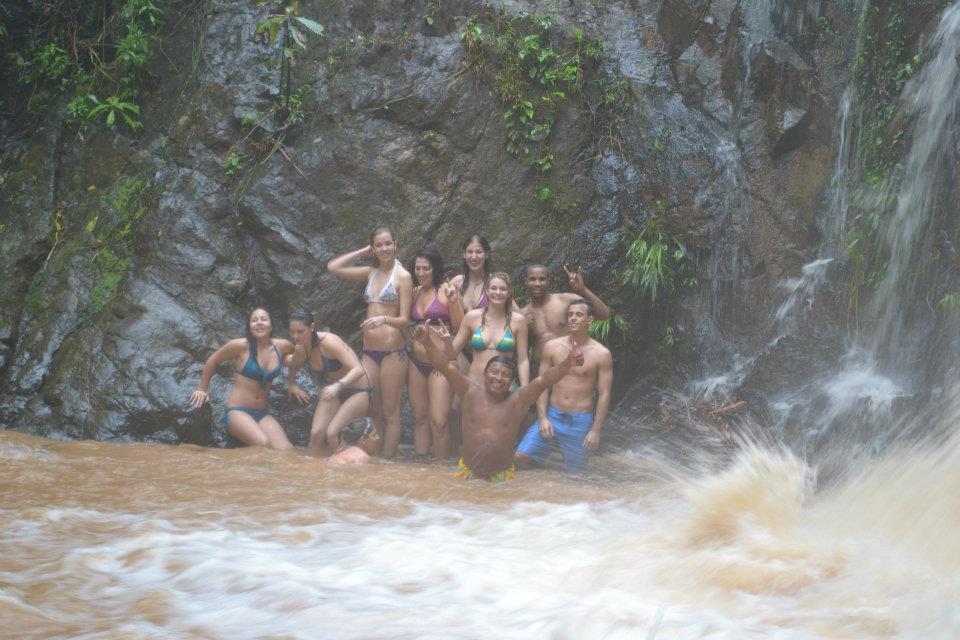
      Finally, we arrived at the side of the river where we were to take long, narrow canoes, guided by the natives, into the depths of the jungle for the experience of a lifetime. However, little could prepare me for the unique, eye-opening experience that came to pass. Panamá’s rainy season was upon us as we rode across the Chagres, past three Emberá villages and into the jungle. These skilled men slowly guided the boats through the winding rainforests rivers and ended at a gushing waterfall. We all unloaded and hiked up to the waterfall and a few of us swam in the reservoir pond at the base. Even one of the Emberá men joined us and revealed a secret passage under the torrential wall of water from the intense rainfall of the season. It was magnificent to see the dense forests up close and in person. The wildlife was abundant, vivacious, and thriving.


       Upon docking our wooden dug out canoe on the river banks of the Emberá settlement in the heart of the Panamanian rainforest, a mixture of euphoria, gratitude and anticipation washed over me. The welcome was overwhelming. Drums, flutes and array of indigenous percussion instruments serenaded us into the village. As the women, in their very distinctive, flamboyant skirts and intricately beaded, sequined tops, danced around each other, I could not help but observe very subtle communicative behaviors among these new and exciting people. They all wore blank expressions. This was business. Doing the traditional “Tusipomo” and “Monkey” dances, displaying their traditional crafts and serving indigenous foods to tourists were all in a days work. Perhaps they were bored by tourists gawking at their traditional way of life or by having to repeat everything about their culture every single day. 

       Perhaps it became routine and meaningless after a while. I believe that the actual dance that we witnessed wasn’t a genuine representation of their culture, maybe because they perform these traditional dances everyday and can become tired of the habitual behavior. Even though the traditional dancing and the music were expressive and entertaining, I couldn’t help feeling a sense of bereavement for the Emberá people.  Since the government has placed limitations on their hunting practices and use of forest resources in their way of life, the Emberá have been forced in a way to resort to other means of income. 

       In my humble opinion, the Emberá peoples successfully straddle the fine line between the dichotomy of eco-tourism – cultural preservation and modern assimilation. Eco-tourism makes it necessary for them to preserve their language, dress, food, method of craft making and dance in order to maintain a sustainable livelihood. On the other hand, eco-tourism showcases the day to day lives of the Emberá people and promotes modernization and assimilation into 21st Century Panamanian society.

       As a citizen of another third world country, Trinidad, I do believe that I arrived in Panamá with some perspective on what to expect. From the vegetation to the infrastructure, everything looked, smelled, sounded and felt distinctly Caribbean. Trinidad and Panamá share a similar history as they were both colonized by Spain in the late 15th Century and early 16th Century. As such, the architecture, narrow pot-holed roads and modest street-side fruit stands created a familiar atmosphere and subtle observations, such as bars on windows, did not need explanations.

       Experiencing Panamá through the mind of a Caribbean person is vastly different from an American perspective. The poverty we observed on the outskirts of Panamá City as a result of rapid and unchecked urbanization was not unfamiliar. As we continued our bus ride, through San Miguelito, one of the surrounding municipalities to Panamá City. I was amazed to see the beauty of the countryside and equally stricken with sadness to see such vitality and color even in the midst of such poverty. Shanty towns, shoddily constructed and with houses almost one on top of the other, created a most discouraging scene. As a developing country, this may be expected. However, considering the extremely successful nature of Panamá's economy, I do believe that more should be done to alleviate the poor living conditions of these unfortunate people. 

       Another topic of improvement that I feel should be addressed is that of waste management in Panamá.  It was shocking to see the amount of trash and debris that littered the streets. There were heaping piles of loose and bagged trash along the roads of the like that I have never before. Apparently, Panamanians have a system for trash pick- and disposal, however it requires a fee for service. As a lot of the people are poor or below the poverty line, it can be difficult to justify the need to pay for the trash service, when more pressing demands are what occupy household funds. It is easier for people to just dispose of their trash on the side of the road rather than pay a fee to have their trash collected. Even when families purchase trash pick-up services, the waste management companies are inefficient and provide a sub-standard level of service. It is a shame to see such a beautiful country have such depressing situations develop. It makes one ponder on questions such as: What are some solutions? If there are trash services, how can they be used efficiently to minimize the problem? These, along with others, call for a change in how government programs are run and how management of funds can be crucial to a simple chore like trash disposal. 


Co-Authored By: Theresa Wolf and Amaara Babwah